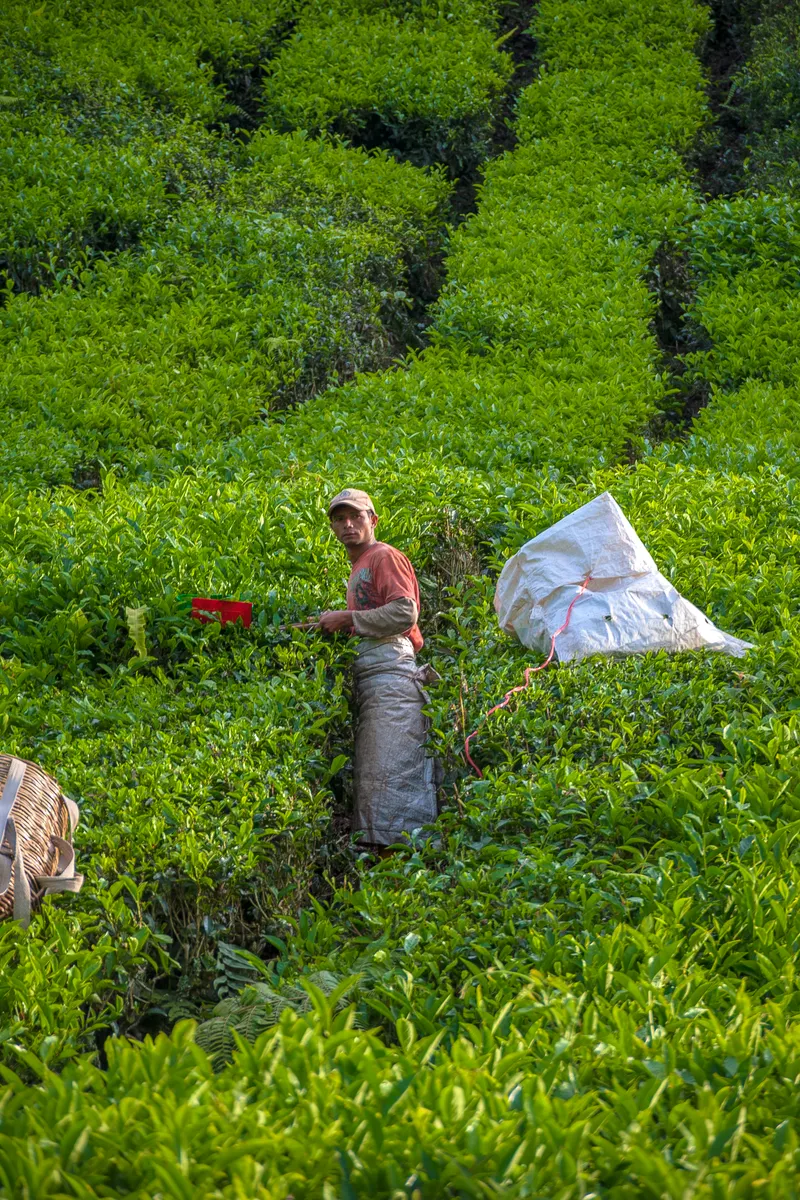
The temperature turns twice within a day. At 1,500 metres the afternoon stays cool and the evening drops below fifteen. The British built it up as a hill retreat and opened the tea estates that still cover the slopes. It is two hours from Ipoh and four from Kuala Lumpur, up a road of bends.
01BOH Tea Estate
Opened in 1929, the largest tea estate in Malaysia and still family run. A tearoom juts from a spur with the fields on every side. Weekend afternoons leave you standing until a table clears. The factory tour costs nothing and takes half an hour.
Take a jacket. At two thousand metres rain drops the temperature fast. The moss lies thick because cloud sits on this ridge almost permanently. The boardwalk is short, and going beyond it means taking a guide.
Pick-your-own charges by weight, and you may also simply buy. The altitude keeps fruit coming year round, but the berries run small and sharp, so most of the crop is turned into jam and ice cream.
A small museum filled from one man's forty years of collecting. A 1950s general store and barber shop have been put back up in full scale, and with captions mostly in Malay and Chinese it works more as looking than reading.
It is not only butterflies. A netted house keeps them loose while the building beside it holds stick insects, scorpions and snakes in glass, which is where children stop. The cool air means some days they barely fly and sit under the leaves instead.
It runs Friday evening to Sunday only. Stalls of highland vegetables, strawberries and honey line both sides, and since the night drops below fifteen degrees, no jacket means a short visit.
A Chinese temple of 1972 on the hill above Brinchang. Yellow walls and red columns sit oddly against tea country, which is what makes them stand out, and after the coaches leave it is empty.
At 2,032 metres, the highest point in Malaysia you can drive to. The road is narrow enough that cars take turns to pass, and unless the cloud lifts in the morning the tower shows nothing. The entrance to the Mossy Forest sits partway up.
Hives are set out through a garden and you walk between them. One hive is glazed so the movement inside shows, and the shop lets you taste the honeys one by one. Anyone wearing scent is better off not spraying it near the boxes.
The main village, with guesthouses, restaurants and the bus stop all on one street. Indian kitchens are common enough that evenings carry the slap of roti dough, and after ten most places shut.
Tea bushes terrace the slope beside the main road down from Tanah Rata to Ringlet. The roadside tearoom's terrace opens onto the estate, so you sip while looking over green rows. Easy parking means tour buses stop here too.
A daytime market lining the road in Kea Farm above Brinchang; honey corn, strawberries and cool-climate greens are heaped up. Greenhouse plots cover the slope behind. It closes earlier than the Brinchang night market, so go before late afternoon.
A slope near Kea Farm planted in tiers with lavender and highland flowers. The cool altitude makes it a rare place to see lavender in the tropics. There is an admission charge, and the exit shop sells lavender ice cream.
A lake formed when the valley below Ringlet was dammed for hydropower in the 1960s. It is the first water you see on the road up, the sign you have reached the highlands. Pull over on the lakeside road and gaze down at the dam wall and water.