The city of the democratic uprising that began on May 18, 1980, and many visitors come for the square by the old provincial office and the cemetery. It is also the hub of generous Jeolla cooking, set tables and tteokgalbi. KTX trains stop at Songjeong, not downtown; change to the subway.
01May 18th National Cemetery
The national cemetery for those killed in the May 1980 uprising, laid out in its current form in 1997. A path behind the memorial altar leads to the old Mangwol-dong burial ground where the dead were first interred, though not many walk that far.
A cultural complex opened in 2015 where the old South Jeolla provincial office stood, held to the end by the citizen militia in May 1980. Most of it sits below a park roof. The clock tower and fountain on the square in front mark where the rallies met.
Named for the 245 bullet marks found in its walls and floors beside the square, believed to be from helicopter fire in 1980. It reopened as a memorial space in 2020, and the 10th floor at the top keeps a room with the bullet holes left as they were.
Missionaries built a hospital and schools on this hill, and several of their red-brick houses remain. The Wilson house is counted as the oldest Western-style home in Gwangju. The lanes are steep, and carrying on to Penguin Village fills half a day.
A corner of Yangnim-dong where residents covered the walls with discarded clocks, pots and picture frames. Locals named it after elderly neighbours who waddled as they walked. People take turns posing at a wall hung with dozens of stopped clocks.
Near the top of Mudeungsan, a national park since 2013, Seoseokdae is a screen of columnar rock. From the Jeungsimsa side the round trip is about five hours. The true summit above still holds a military base and is normally off limits.
A market held across from Gwangju Songjeong Station since 1913, refitted with young businesses in 2016. It is the right length for a loop while waiting for a train, and the signs copy the old style. The tteokgalbi alley is a short walk away.
An old downtown market that became known as an art market after artists opened studios in its emptying units. By day it sells side dishes and fish; on night market days the same aisles fill with food carts.
Much of the ceramics from the Yuan trading ship raised off Sinan in 1976 came to this museum. The hull itself is in Mokpo, so in effect the ship is there and its cargo is here. The halls are large; to see just the Sinan finds, pick up the floor map first.
In Damyang just north of Gwangju, the Joseon scholar Yang San-bo shaped a garden around a stream left as he found it. The wall opens where the water runs under it, and listening from the Gwangpunggak pavilion is the point. The bus out takes nearly an hour.
The former Catholic Center on Geumnam-ro holds diaries, photos and trial papers from the 1980 uprising, a collection UNESCO listed as documentary heritage in 2011. Its windows face the very street the marchers used, which changes how the walk outside feels.
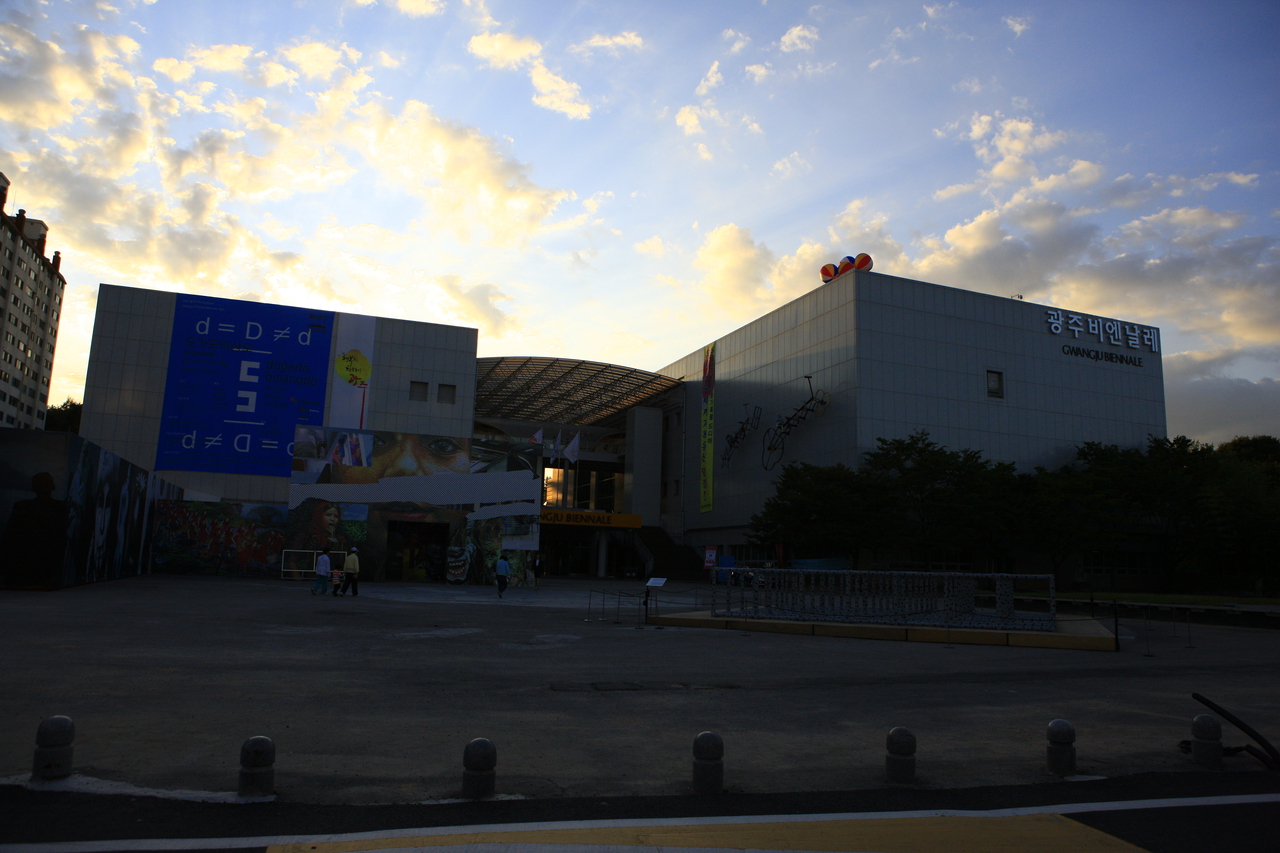
Main venue of Korea's first international art biennale, begun in 1995, in Jungoe Park, Yongbong-dong. It usually opens in autumn every other year, with other shows between. The city art museum and national museum share the park; one day covers all three.
Opened in 2014, home ground of the KIA Tigers baseball club. Its stands are known for fierce chanting, and beyond the outfield the Mudeungsan ridge shows. Roads round Gwangju Station jam on game nights, so take the subway or a bus.
A whole hillside of bamboo in Damyang town, next to Gwangju, threaded with several walking trails. The tall canes block the sun, so it stays cool inside even at midsummer. The Gwanbangjerim embankment and noodle street begin at the gate, so the walk continues.
Metasequoias planted along a national road in the 1970s have grown thick enough to roof it from both sides. It is now closed to cars as a footpath, with a small entry charge. Most photographers come in May for new needles and November for the rust-red turn.