Twenty-odd royal mounds rise out of the middle of town like grassed hills, so you do not go to the ruins here — you walk between them. April blossom and the colour of October and November bring the crowds. It sits in a basin, and the summer heat is no joke.
01Bulguksa
Work on it started, by tradition, in 751. Two pagodas of completely different design face each other before the main hall. The ornate one, Dabotap, is the pagoda on the ten-won coin. The grounds take two hours at a slow pace.
You see the Buddha through a glass wall, and no cameras go past it. It is ten minutes by car from Bulguksa. The old footpath is still there too. Some people take the hour uphill through the trees instead.
Paths run between more than twenty grassed burial mounds. Exactly one of them, Cheonmachong, is opened up so you can go in and see what was buried there. Outside the wall stands a single magnolia with a permanent queue in front of it.
Some three hundred and sixty cut stones stacked nine metres high, standing as the Silla builders left it. Lit at night it reads as a different object entirely, on a lawn wide enough that nobody fights for tripod space.
It stays open until ten, and night is really the only time to come. Three reconstructed halls stand mirrored in the pond, but the reflection everyone wants only holds when the air is dead still.
The permanent galleries are free, and the Divine Bell of King Seongdeok hangs in its own pavilion out in the courtyard. It is no longer struck, for the sake of the bronze; a recording is played instead, at set times.
The path starts in the pine wood at Samneung and climbs to the ridge. Stone Buddhas and rock carvings are scattered along it. Up past Sangseonam to Geumobong and back is three hours. There are few signs and the junctions are easy to get wrong.
A hanok quarter holding the Choe family estate and the old Confucian school. The rebuilt Woljeonggyo bridge stands five minutes' walk away. Once the lights go on at sunset the crowd beats anything the daytime managed.
An old lane running along the wall of Daereungwon, now packed with shops converted out of hanok. It is narrow and cars still use it, so weekend afternoons are barely walkable. Leave the car at the Daereungwon lot instead.
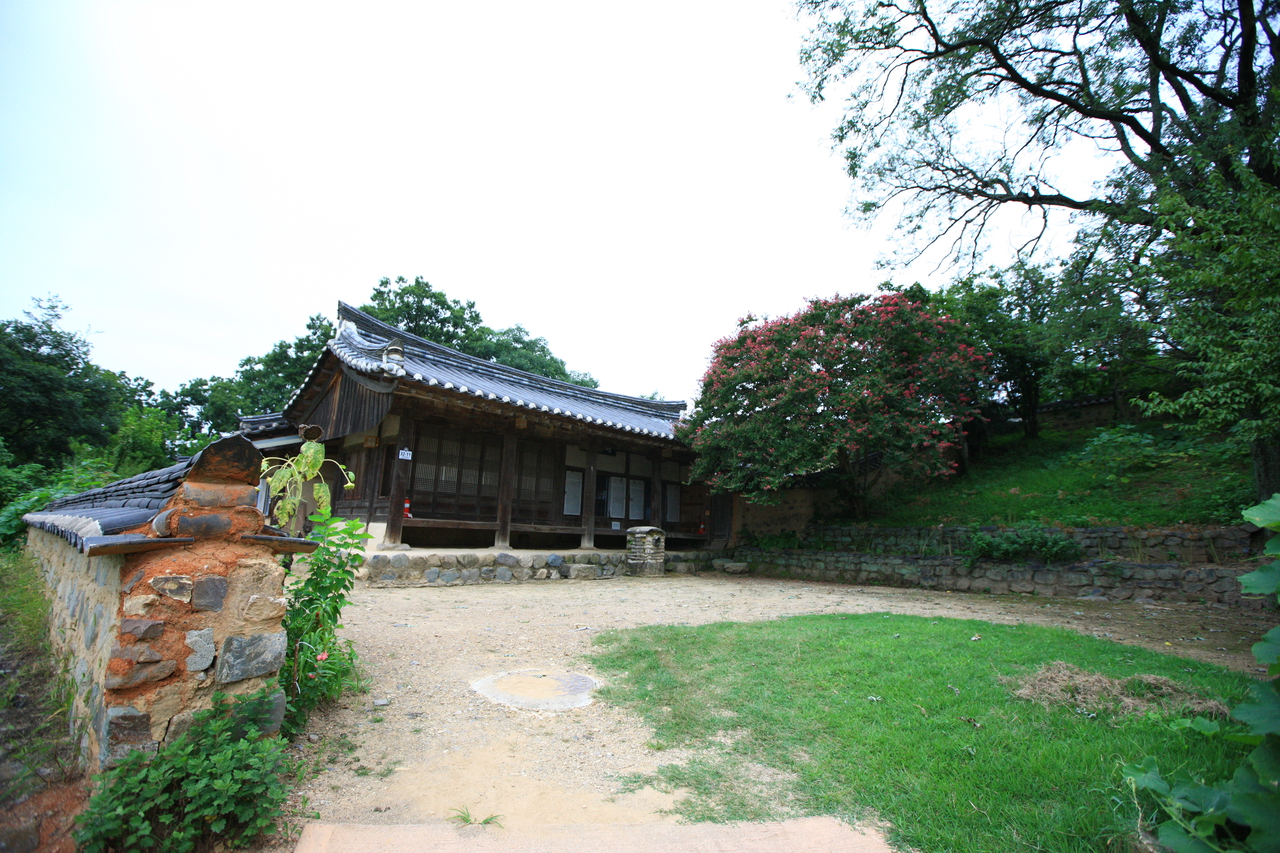
A Joseon clan village forty minutes by car from the city and still lived in, its thatch and tile scattered up and down the hillside so that covering all of it means two hours on foot.
King Munmu vowed to become a dragon and guard his kingdom after death, and tradition buries him on a rock islet off Bonggil beach. It lies about 200m out and no boat goes there, so you watch from the sand. The sun rises behind it; tripods gather each dawn.
The temple is gone, and on its empty field twin stone pagodas over 13m tall face each other east and west. It was built for King Munmu, and legend says the hall floor let seawater in beneath it for his dragon. The underwater tomb is a 5-minute drive.
Founded in 634, it keeps a pagoda of stone cut and stacked like bricks. Only three storeys remain, with guardian figures flanking the doors on all four faces of the base. The open field of the Hwangnyongsa site is next door on foot.
Silla's largest temple site; its nine-storey wooden pagoda, said to stand 80m tall, burned in the Mongol invasion of 1238. Rows of foundation stones are all that remain on the wide field. In the history centre beside it a 1/10 model conveys the scale.
The heart of the Bomun resort district, ringed by hotels. In early April both sides of the lakeshore road become a cherry tunnel and cars crawl. The circuit is about 8km, easier by bicycle than on foot.
A shore that became known only after the army's coastal fence came down, with one outcrop where basalt columns lie spread like an open fan. A 1.7km seaside path links Eupcheon and Haseo harbours. From the observatory roof you peer down onto the fan.
Above caves cut into a tuff cliff a Buddha is carved in the rock face. The temple is known for Seonmudo, a Buddhist martial art, which you can watch in demonstrations or learn on a temple stay. The rock steps to the carving are steep; grip the handrail.
Remains of a Silla royal garden where cups were floated down a stone channel that winds like an abalone shell while poems were composed. In 927, the story goes, King Gyeongae was caught here by Later Baekje troops. No water runs now, so it is a quick stop.