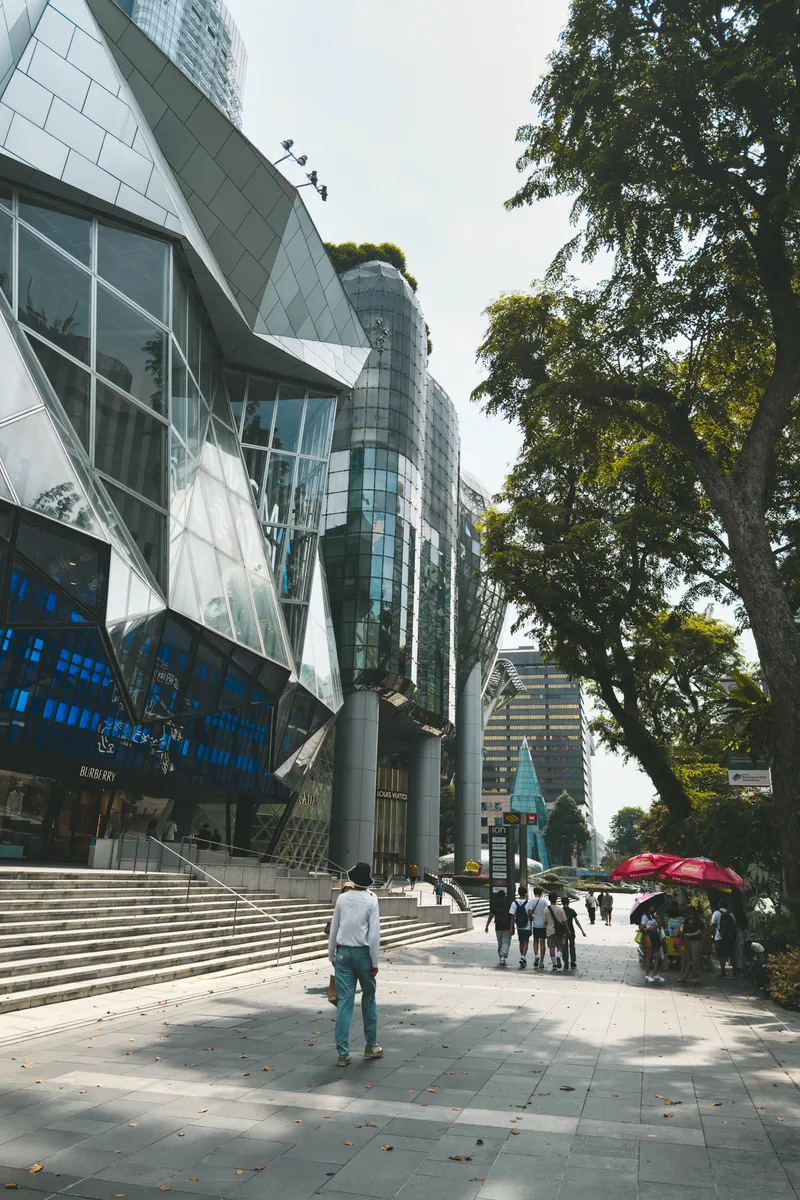
Malls stand where the orchards were, and most of what there is to see is indoors. The basements join the train stations, so on a wet day you can walk a long way without surfacing. Behind the malls a lane of lived-in old shophouses climbs a hill, and one block changes what the street sounds like.
01Orchard Road
The name is literal: this was orchard country. In the 19th century a dirt track ran between nutmeg and pepper estates. Malls now line both sides of 2.2km. The street itself shows little, since the substance is indoors and below ground.
The mall digs four floors down, so you arrive off the train without meeting a drop of rain. Above ground its glass wall doubles as a screen, and the whole face changes after dark.
The largest bookshop in Singapore. It takes a whole floor of Ngee Ann City on level 4, with as much Japanese and Chinese on the shelves as English. Two tills sit at opposite ends, so which exit you aim for decides the queue.
Step through the narrow gap between two malls and the noise stops. Peranakan shophouses of the early 1900s run up the hill. People still live in them, so the gates are not doorways for visitors. Tiles and shutters change colour house by house.
A World Heritage site that takes no admission. It opens at 5am and shuts at midnight, so many walk it early to get ahead of the heat. The one part inside that charges is the National Orchid Garden.
The only ticketed part of the Botanic Gardens, planted with over 1,000 species of orchid. One cooled glasshouse sits inside it, and at midday people rest in there before heading back out.
On ordinary days the gates stay shut. It is the president's residence, and the lawns and gardens open only on set public holidays, when a passport gets you through. Istana Park outside the wall is open all the time.
When it rains, go down. Mall basements join Somerset to Orchard, so the walk happens without surfacing. Floor levels differ from one mall to the next, though, which puts stairs and ramps along the way.
From the middle of November to early January the lights go up along the trees and overpasses. The theme is rebuilt each year, so it is never last year's display you are going to see. On weekend evenings the pavement moves one way only.
Take the lift to level 11 and a garden opens with nobody in it. It looks down the length of Orchard Road, and since the mall barely signs the way up, only those who know go.
Low British army barrack blocks in hillside woods now hold restaurants, bars and antique shops. It backs onto the Botanic Gardens at their southern tip, so a garden walk can end in dinner here. The walk up is long, and most people come by taxi.
A home-grown department store that began with its founder peddling goods door to door from a trunk. The Chinese roof of green tiles stands out at once among the glass malls. The basement food hall stocks local snacks and sauces in one place.
Built in 1900 as the Teutonia Club for the German community, its turreted main block is a national monument. Set on a rise behind Orchard Road, it stays, out of earshot of the traffic. Plenty of people come just for the durian desserts sold at its cafe.
A hawker centre by Newton station on Orchard's northern edge, thick with seafood grill smoke in the evening. Tourists draw touts who bring menus to your table; check prices at the stall and order there instead. It keeps going late into the night.
An ageing mall packed floor by floor with Filipino grocers, remittance counters and eateries. On Sundays, Filipino domestic workers on their day off gather and the forecourt turns into a picnic. Its money changers offer some of the better rates in town.
An open zoo where moats and planting, not cages, separate animals from visitors. It sits by a reservoir at Mandai in the north, a bus or taxi ride from Orchard. The orangutans crossing the trees overhead are liveliest in the morning.
A zoo opened in 1994 that runs only after dark. A tram loops through the darkened forest past nocturnal animals, and there are walking trails as well. Flash is banned, so few photos come out.
The bird park that replaced Jurong Bird Park, opened at Mandai in 2023. Visitors walk inside huge aviaries themed by region, among the birds. Feeding stations dotted around bring the birds in close.
Primary forest covering the country's highest hill, with a paved path to the summit. The climb is brief yet steep, and locals head up in the cool of the morning. Macaques snatch plastic bags, so food stays inside your pack.
A 250m suspension bridge between two hills in the reservoir forest, looking down on the canopy from treetop height. Crossing runs one way only, and the bridge is reached by a long forest trail. The bridge shuts on Mondays.